
November 3, 2026 · Jeff Rountree
Does My Commercial Auto Insurance Cover My Work Trailer?
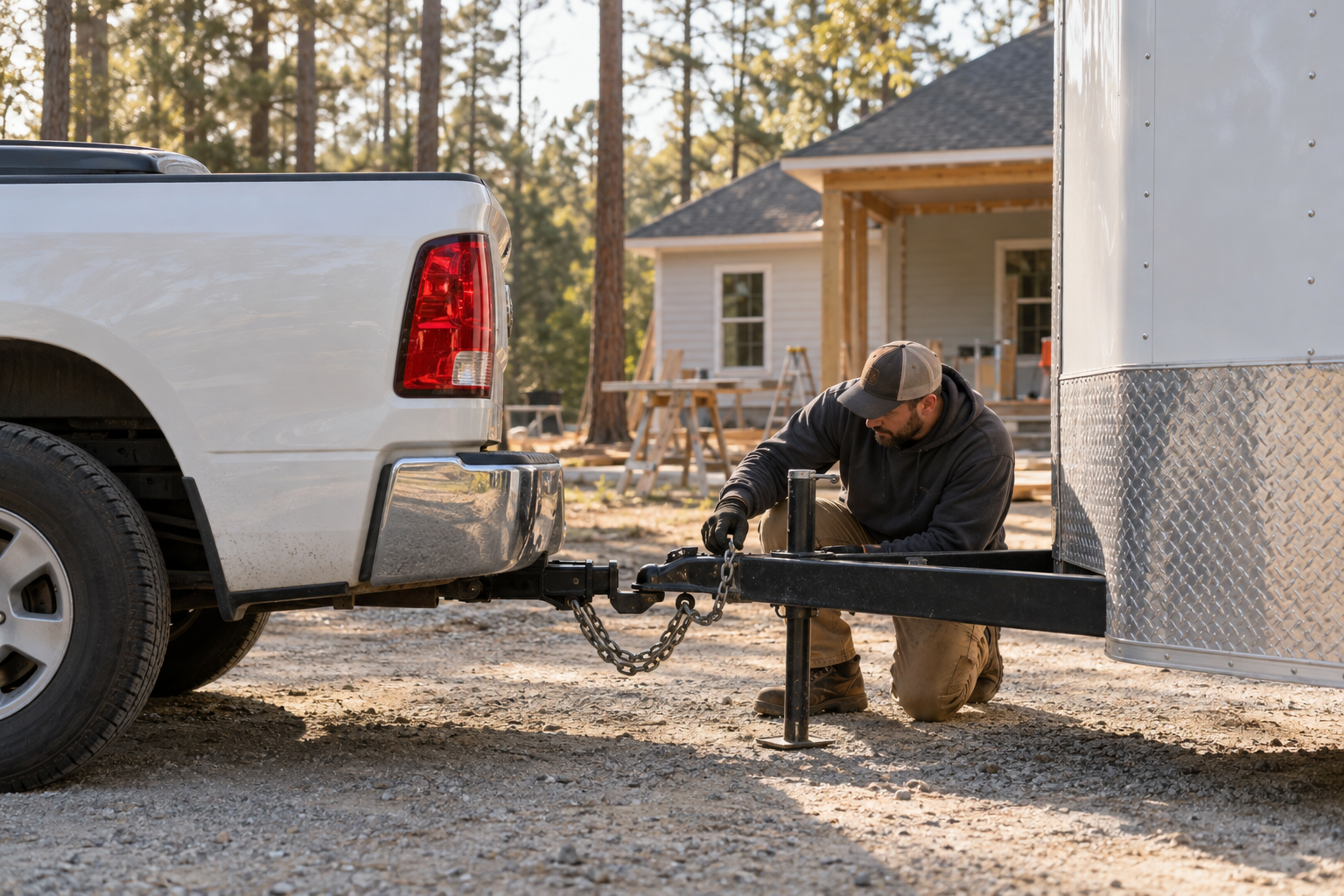
Your commercial auto insurance may cover liability involving your work trailer, but damage to the trailer itself and the tools inside often need separate coverage. American Commercial Auto Insurance (aca22.com), serving Florida and Georgia contractors, helps business owners check those details before they haul. The answer depends on your policy, the trailer, and how you use it.
A trailer can look like a simple extension of your pickup. From an insurance standpoint, it creates several different questions. If it swings into someone’s car, that is a liability issue. If someone steals it, that is a physical damage issue. If your saws and compressors disappear with it, that is an equipment issue. One coverage does not automatically handle all three.
Is my trailer automatically covered when I hook it to my truck?
Sometimes there is liability coverage for a trailer being pulled by an insured vehicle, but you should not assume every trailer qualifies. Policy definitions, covered-auto designations, ownership, size, and use can affect the answer.
For example, a landscaper pulling a utility trailer and a remodeling contractor pulling an enclosed equipment trailer may have different coverage needs. Some policies extend liability coverage to certain trailers without separately listing each one. Others require more specific handling. Even where that extension applies, it does not necessarily insure the trailer against theft or collision damage.
Tell your agent what you actually pull, not just what you drive. Include whether the trailer belongs to your business, you personally, a rental company, or another contractor. Also explain whether employees use it and whether it stays at jobsites overnight. Those details help determine which coverage needs to be arranged.
What coverage pays if my work trailer is damaged or stolen?
Physical damage coverage is what you generally look for to protect the trailer itself. Collision typically addresses crash-related damage, while comprehensive generally addresses covered losses such as theft, fire, or certain weather damage, subject to policy terms and deductibles.
If your trailer rolls over on the way to a Georgia jobsite, liability insurance is not the coverage that repairs your own trailer. Likewise, if an enclosed trailer disappears from a Florida storage yard, having liability coverage on the pickup does not automatically pay to replace it.
Ask whether your trailer needs to be individually scheduled and how a claim would be valued. Do not assume the settlement would equal the cost of a brand-new replacement. If the trailer is financed, the lender may require physical damage coverage and proper recognition of its financial interest.
- Provide the trailer’s year, make, model, VIN, and estimated value.
- Confirm that the policy identifies the correct owner and business use.
- Ask which physical damage coverages and deductibles apply.
- Discuss permanently installed racks, shelving, or specialized equipment.
- Explain where the trailer is stored and what security measures you use.
Are tools and materials inside my trailer covered?
Usually, you should not rely on commercial auto physical damage coverage to insure loose tools, equipment, or job materials inside a trailer. Those items commonly need contractors equipment, tools coverage, or another appropriate property policy or endorsement.
Picture a stolen enclosed trailer carrying nail guns, ladders, and a compressor. Coverage for the trailer shell and coverage for its contents are separate questions. You could have a covered trailer claim and still discover that the equipment inside was not insured.
An inland marine policy is one common way to insure tools and equipment that move between locations. Despite the name, it is not just boat insurance. Ask about theft conditions, overnight storage requirements, individual-item limits, and rented or borrowed equipment. Customer materials may need different treatment than your own tools, so mention those too.
What if I borrow a trailer or leave mine at a jobsite?
Borrowed trailers and detached trailers deserve a specific coverage check. Permission to use someone’s trailer does not prove your policy covers damage to it, and parking your own trailer does not guarantee every loss is covered.
Before borrowing or renting, ask about both liability and physical damage while the trailer is in your care. Review the rental agreement rather than assuming your truck’s insurance satisfies it. For a trailer left at a jobsite, explain whether it is attached, locked, fenced in, or accessible to the public. Liability involving a detached trailer can require a closer look at your auto and general liability policies.
At American Commercial Auto Insurance, we are an independent agency. Policies are written under The Rountree Agency ~ OnePoint Insurance Partners. Our advice is straightforward: review the pickup, trailer, and contents together instead of finding the gaps after a claim. Availability, terms, and rates vary by carrier and business.
Quick answers
- Does my pickup’s insurance automatically cover my trailer? Some liability coverage may extend, but verify your policy’s conditions.
- Does liability pay to replace my stolen trailer? No. You generally need applicable comprehensive or other property coverage.
- Are my tools covered with the trailer? Not automatically. Ask about separate tools and equipment coverage.
- Should I report a newly purchased trailer? Yes. Contact your agent promptly rather than assuming automatic coverage.
Want help checking your setup? Use the free quote form on our home page at aca22.com. Tell us about your work vehicles, trailers, and what you carry so we can help you review coverage that fits your Florida or Georgia business.