
November 9, 2026 · Jeff Rountree
Can I Put Two Work Trucks on One Commercial Auto Insurance Policy?
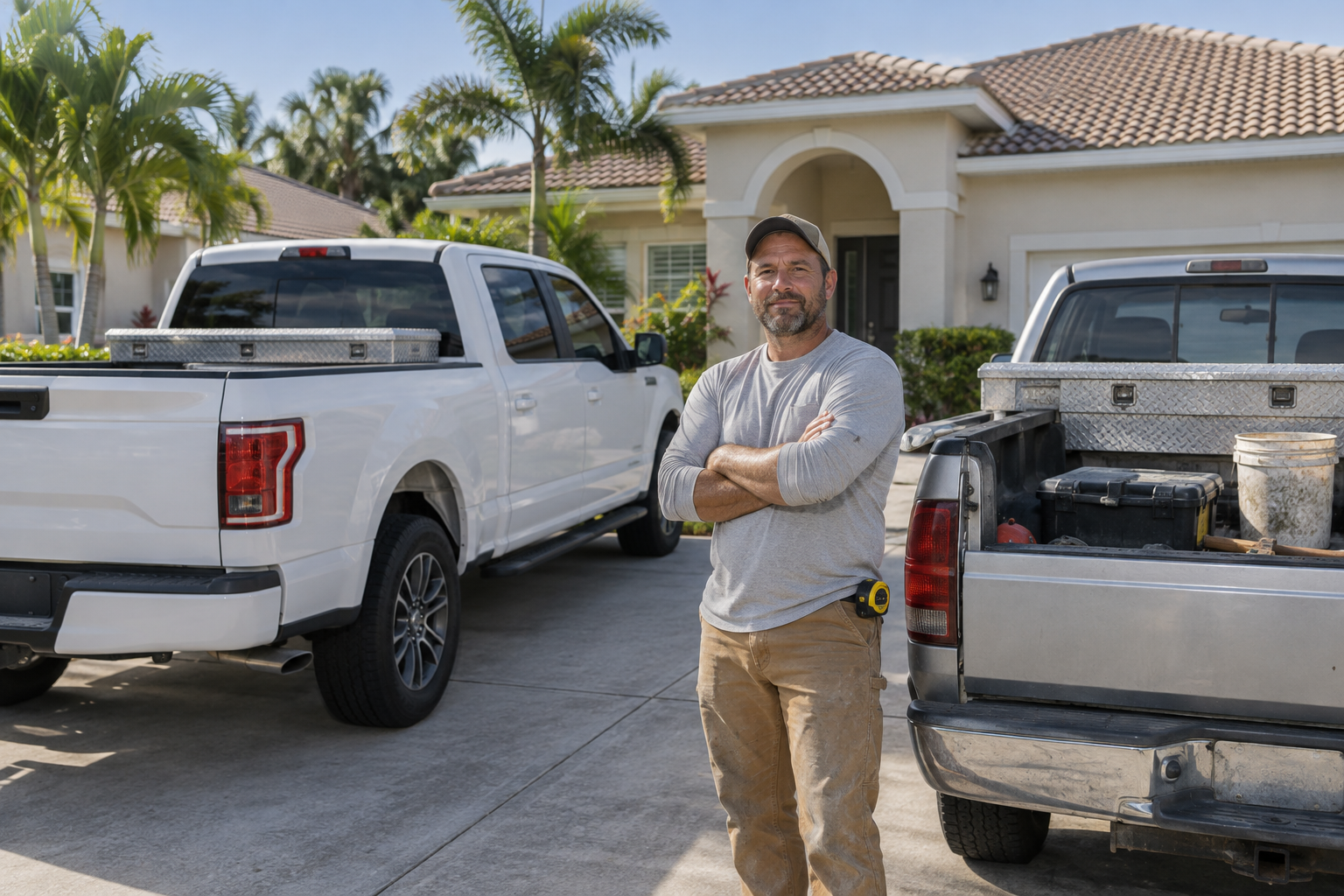
Yes, you can often put two work pickups or vans on one commercial auto insurance policy, provided the insurer accepts the vehicles, ownership, drivers, and business use. American Commercial Auto Insurance (aca22.com), serving Florida and Georgia contractors, helps business owners compare that option with keeping separate policies. Combining vehicles can simplify insurance, but it does not automatically lower your premium.
Small fleet insurance is getting attention for a practical reason: plenty of contractors have outgrown a one-vehicle operation without becoming a large company. Maybe you added a second crew, bought a van for your lead technician, or kept your older pickup as a backup. The next question is whether those vehicles belong together on the same policy.
Do two work vehicles count as a small fleet?
Sometimes, but there is no universal vehicle count that makes a business a small fleet. Each insurer sets its own eligibility rules, and a two-vehicle business may qualify for a regular commercial auto policy without entering a separate fleet program.
Do not get hung up on the label. What matters is whether the policy properly covers your business and the vehicles it operates. A plumbing company with two service vans and a remodeling contractor with two light-duty pickups may both be able to insure their vehicles together, even if their insurers use different names for the arrangement.
Ownership needs attention. If one pickup is titled personally and another belongs to your LLC, tell your agent before requesting a combined quote. That does not always prevent an arrangement, but the named insured, vehicle ownership, and any lease or financing requirements must be handled correctly.
Will one policy cost less than two separate policies?
It might, but the only reliable answer comes from comparing quotes with equivalent coverage. Multiple-vehicle pricing or a different insurer's underwriting approach may help, while a higher-risk driver or different vehicle use can affect the overall price.
Rates vary with your location, driving records, claims history, vehicle types, mileage, and coverage choices. For Florida and Georgia contractors, accurate garaging addresses and travel details matter. A van making local service calls is not necessarily priced like a pickup regularly traveling farther between job sites.
This is also where our Rule of 22 may be worth discussing: having 2+ trucks and 2+ years with the same carrier could mean saving up to 40%. That is a potential opportunity, not a guaranteed discount or a promise that every qualifying business will save. Your actual result depends on underwriting and the quotes available.
Ask for an apples-to-apples comparison. A lower premium is not much of a win if it comes from dropping collision coverage you wanted, raising deductibles beyond your cash reserve, or reducing liability protection required by a customer contract.
Can each vehicle have different coverage on the same policy?
Often, yes. Insurers commonly allow certain vehicle-specific choices, such as comprehensive and collision coverage and their deductibles, while other terms may apply across the policy. Your agent should explain which choices can differ.
For example, a financed service van may need comprehensive and collision to satisfy the lender. An older, paid-off pickup deserves a separate discussion about its value and what you could afford to replace yourself. Do not assume every coverage automatically extends to every listed vehicle.
- Confirm liability protection for each vehicle and whether it meets applicable business and contract needs.
- Review comprehensive and collision selections, deductibles, and lender requirements vehicle by vehicle.
- Ask whether rental reimbursement or other optional benefits are included for each vehicle that needs them.
- Identify permanently installed equipment and ask how it is valued and insured.
- Discuss portable tools separately; putting vehicles on one policy does not automatically insure their contents.
What should I have ready before combining my work vehicles?
Have your current policy documents, vehicle details, driver information, and an accurate description of your operations ready. Better information makes the comparison more useful and helps prevent surprises after the policy starts.
Provide VINs, ownership details, overnight parking locations, estimated mileage, and the names of everyone who regularly drives. Explain whether employees take vehicles home, switch between them, or travel outside your usual service area. Include available claims history and any customer insurance requirements.
Before canceling anything, confirm that the replacement coverage is bound and its effective date avoids a gap. Ask about cancellation terms on the old policies, too. One renewal date can be convenient, but the transition should be planned rather than rushed.
Quick answers
- Can a pickup and a van share one policy? Often yes, subject to the insurer's eligibility rules.
- Do I need five vehicles to get commercial auto insurance? No. Commercial auto coverage is available for a single eligible business vehicle.
- Does combining vehicles guarantee savings? No. Compare equivalent coverage and total costs.
- Can employees switch between listed vehicles? Ask your agent to confirm driver eligibility and any policy restrictions first.
Want to see whether your work vehicles belong on one policy? Use the free quote form on our home page at aca22.com. American Commercial Auto Insurance is an independent agency, with policies written under The Rountree Agency ~ OnePoint Insurance Partners. We help Florida and Georgia contractors compare options and understand what they are buying.